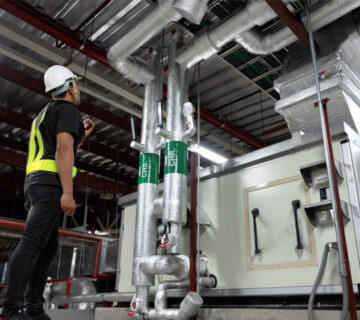
No facility—regardless of how luxurious its design or how solid its structure—can function properly without efficient and integrated electromechanical systems.
Electromechanical works are considered the “soul” that brings life to the architectural and structural frame, handling essential functions such as electricity, ventilation, cooling, communications, and safety.
A well-designed and implemented electromechanical system ensures smooth building operation, extends the facility’s lifespan, and reduces future maintenance costs.
What Are Electromechanical Works?
Electromechanical works (MEP – Mechanical, Electrical, and Plumbing) include several interconnected systems, such as:
-
Electrical Systems: Power distribution, lighting, generators, and backup power systems (UPS).
-
HVAC Systems: Heating, ventilation, and air conditioning to ensure user comfort and a healthy indoor environment.
-
Plumbing Systems: Water supply networks, drainage systems, and stormwater disposal.
-
Fire Fighting and Alarm Systems: Early detection and response systems for protecting lives and property.
-
BMS – Building Management Systems: Smart control systems for monitoring performance, saving energy, and improving operational efficiency.
Importance of Electromechanical Works in Major Projects
-
User Comfort: Through precise control of temperature, air quality, lighting, and water flow.
-
Energy Efficiency: Smart systems reduce waste and lower operational costs.
-
Building Safety: Reliable fire alarm and firefighting systems are essential for safety.
-
System Integration: Facilitates easier building management and maintenance.
-
Asset Value: Buildings with integrated MEP systems are more attractive to investors and end users.
Challenges in Executing Electromechanical Works
-
Cross-Discipline Coordination: Ensuring MEP installations align with civil and architectural works.
-
Compliance with Codes: Adherence to local and international standards for system safety and performance.
-
Energy Efficiency vs. Comfort: Balancing technical efficiency with user satisfaction.
-
Quality Control: Throughout all project phases to ensure all components function as an integrated system.
-
Cost & Timeline Control: Due to the complexity and overlap of MEP works with other project elements.
Key Success Factors in Electromechanical Works
-
Early Planning: Integrating MEP designs from the initial engineering stage.
-
Approved Materials & Equipment: Ensuring high performance and long-term reliability.
-
Qualified Contractors: Engaging specialized, experienced MEP contractors.
-
System Testing Before Handover: Conducting rigorous technical testing for each component.
-
Preventive Maintenance Plans: Maintaining system performance post-handover.
Electromechanical works are the hidden backbone that guarantees operational efficiency and complete safety for any building.
In major projects, the complexity and demands of MEP works require precise execution based on the highest standards of quality.
Successful MEP implementation directly impacts building efficiency, operating costs, user comfort, and safety—making the selection of a qualified contractor just as critical as the architectural design itself.